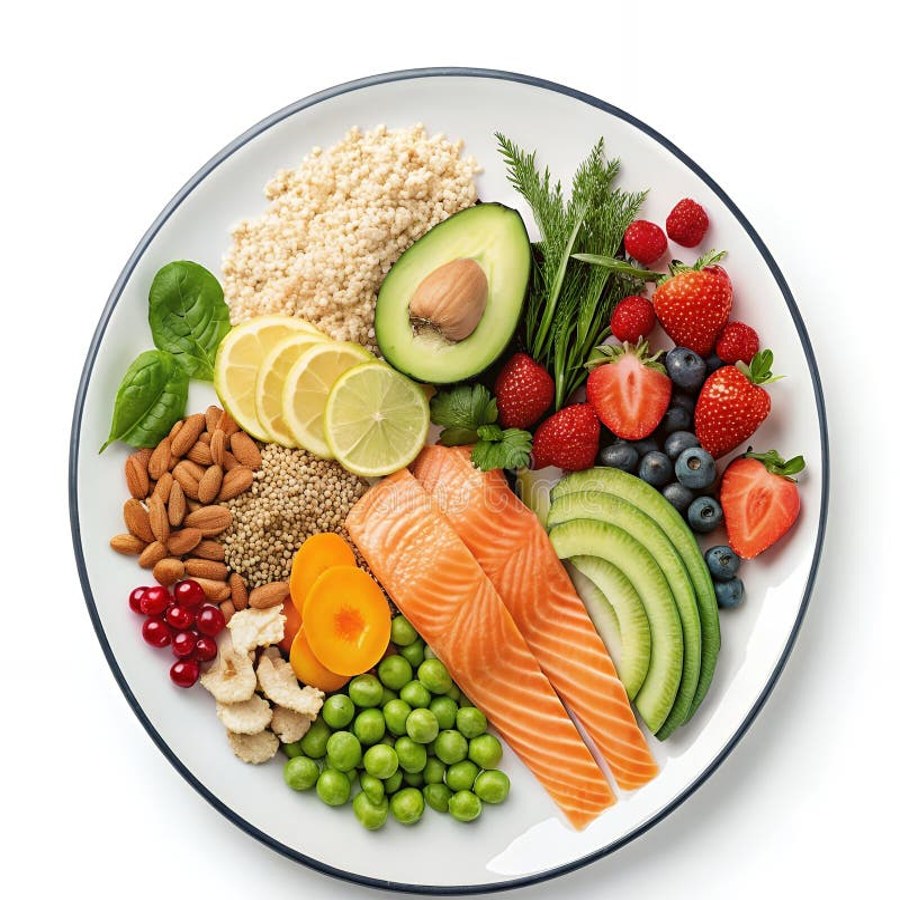
Most people already know what healthy food looks like. The hard part is making it happen on a Tuesday evening when you are tired and the fridge looks uninspiring. A balanced diet is not a menu you follow perfectly, it is a framework flexible enough to repeat.
Start With a Plate Pattern, Not a Recipe
- Fill roughly half your plate with vegetables and fruit, choosing colour variety across the week rather than at every meal.
- Give a quarter of the plate to protein such as fish, eggs, beans, lentils, yoghurt or lean meat.
- Use the remaining quarter for slow-release carbohydrates such as oats, brown rice, potatoes or whole grains.
- Add a source of healthy fat, like olive oil, nuts, seeds or avocado, to help you feel satisfied.
Make the Healthy Choice the Easy Choice
- Prepare ingredients rather than full meals. Washed greens and cooked grains can become several different dinners.
- Keep ready-to-eat protein in the fridge so a meal never depends on takeaway.
- Shop from a short, repeatable list instead of a long aspirational one.
- Keep fruit and nuts visible on the counter and treat foods out of sight.
Fix the Weak Points in Your Week
- Notice which days or meals regularly go off track, then plan only those.
- Keep a simple back-up meal you can make without thinking or shopping.
- Eat with attention rather than in front of a screen, so fullness signals register.
- Drink water steadily through the day instead of catching up in the evening.
Let a Professional Personalise It
- If you manage a health condition, take medication, are pregnant or are recovering from illness, general advice is not enough.
- A nutrition consultation reviews your history and blood work before suggesting changes.
- Personal plans account for food preferences and cultural meals, which is why they last.
- Review progress every few months and adjust rather than starting over.
Key Takeaway
A balanced diet is a pattern you can repeat, not a test you can fail. Build the pattern around your real schedule and it will hold up on your busiest days.
Want advice for your own situation?
Book a consultation and our clinicians will tailor this guidance to your health, history and goals.
This article shares general health information and is not a substitute for personal medical advice. Please speak with a qualified clinician about your own circumstances.